
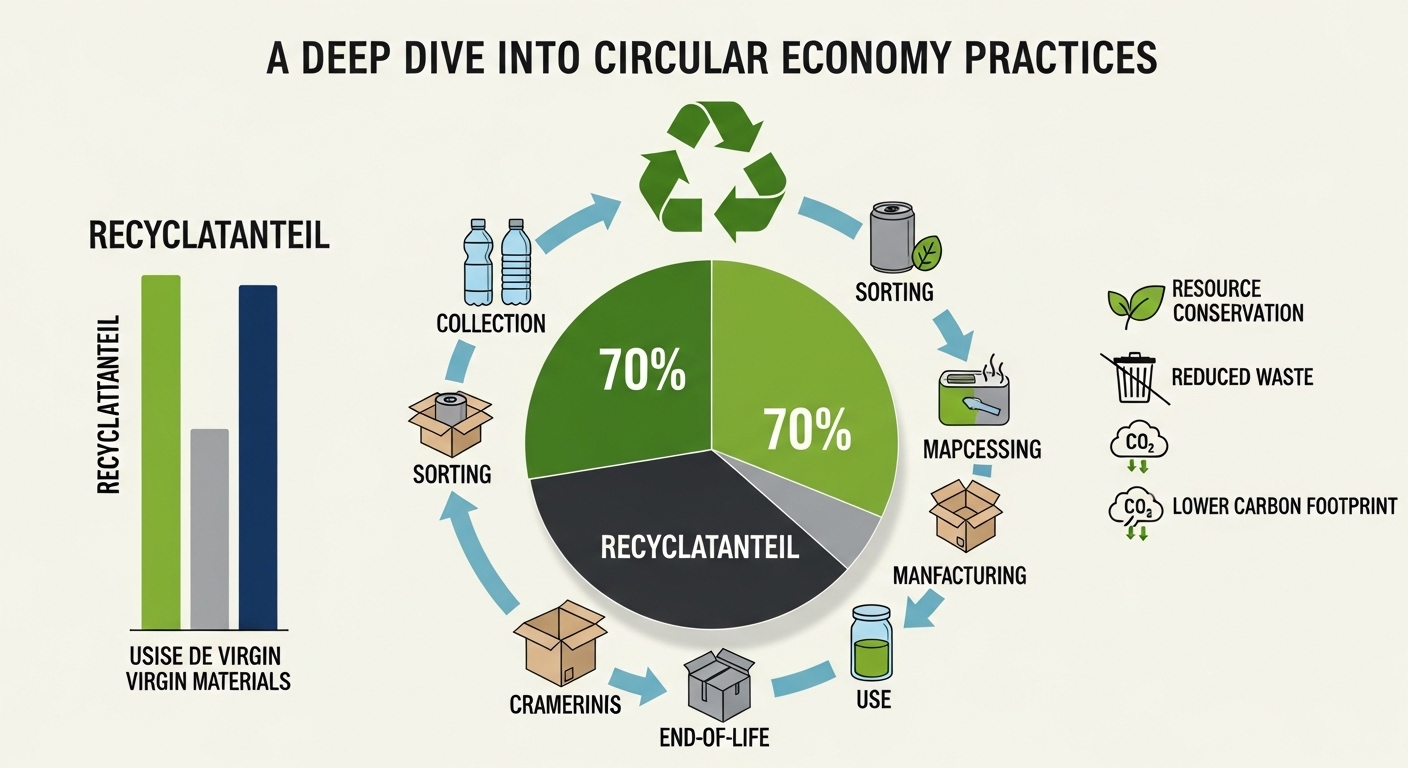
Recyclatanteil: A Deep Dive into Circular Economy Practices
Recyclatanteil represents a shift in how we perceive materials and waste. It emphasizes the importance of integrating recycled content into new products, reducing reliance on virgin resources. This approach is at the heart of circular economy practices, promoting sustainability and minimizing environmental impact.
By adopting recyclatanteil, industries can create closed-loop systems where materials are reused time and again. This not only conserves natural resources but also fosters innovation in product design and manufacturing processes, leading to a more sustainable future for all.
What is Recyclatanteil?
Recyclatanteil refers to the proportion of recycled materials used in production processes. This concept is central to the circular economy, promoting sustainability by minimizing waste and conserving resources.
By incorporating recyclatanteil, businesses can reduce their environmental footprint while also tapping into new market opportunities. It encourages innovation in material recovery and showcases a commitment to responsible consumption, making it an essential metric for companies aiming for sustainable growth.
Why Germany Is Leading This Transition
Germany has emerged as a leader in the recyclatanteil movement due to its strong commitment to sustainability. With robust legislation and ambitious recycling targets, the country sets an example for others.
The German government actively promotes innovation in circular economy practices and provides financial incentives for businesses adopting recycled materials. Cultivating a culture of environmental responsibility among citizens further supports this transition, making recyclatanteil not just a policy goal but also a shared value that resonates deeply within society.
The Business Case for Recycled Content
Investing in recycled content offers companies significant cost savings and resource efficiency. By utilizing materials that have already been processed, businesses can reduce raw material expenses and lower their environmental footprint. This resonates with both consumers and investors increasingly focused on sustainability.
Furthermore, incorporating recyclatanteil into products enhances brand reputation. Companies demonstrating a commitment to sustainable practices often experience increased customer loyalty. As regulations tighten around waste management, firms prioritizing recycled content position themselves as industry leaders ready for future challenges.
The Technical Complexity Behind Recyclatanteil
The technical complexity of recyclatanteil involves a sophisticated interplay between material science and engineering. Recycling processes require precise methods to ensure that materials retain their quality and performance after being repurposed.
Different types of plastics, metals, and paper have unique recycling requirements, making the transition from waste to reusable resources challenging. Innovations in sorting technology and purification methods are essential for enhancing the viability of recycled content in various products. This complexity is crucial to achieving effective circular economy practices across industries.
Regulatory Momentum and Market Signals
Regulatory momentum is a powerful force driving the adoption of recyclatanteil in various industries. Governments across Europe, particularly Germany, are implementing policies that mandate higher recycled content in products. These regulations not only push manufacturers to innovate but also create a more standardized market for recycled materials.
Market signals further amplify this shift. Consumers increasingly favor sustainable products, prompting businesses to respond accordingly. As demand grows for eco-friendly options, companies are recognizing that incorporating recyclatanteil isn’t just good practice; it’s essential for remaining competitive.
Sector-by-Sector Impact
The impact of recyclatanteil varies across sectors, with notable shifts in manufacturing and packaging. Companies are increasingly integrating recycled materials into their supply chains, leading to reduced resource consumption and waste.
In the fashion industry, brands are embracing circular practices by utilizing recycled textiles. The construction sector is also transforming, using reclaimed materials that minimize environmental footprints. Each sector’s commitment to recyclatanteil showcases a broader movement towards sustainability while generating economic benefits and fostering innovation in product design.
Comparing Industry Adoption Levels
Adoption levels of recyclatanteil vary significantly across industries. The packaging sector often leads, driven by consumer demand for sustainable options. Companies are increasingly incorporating recycled materials into their products to enhance brand loyalty.
In contrast, sectors like construction and textiles face greater hurdles. These industries rely on specific material properties that recycled alternatives may not always match. As a result, the transition can be slower, highlighting the need for tailored strategies in each field to encourage broader adoption of recyclatanteil practices.
Innovation Opportunities Around Recyclatanteil
The rise of recyclatanteil opens the door to numerous innovation opportunities. Companies are exploring advanced materials that enhance product lifespan while maintaining sustainability. This fusion of technology and eco-consciousness is driving new solutions.
Startups are also emerging, offering services that facilitate recycling processes or develop unique ways to incorporate recycled content into everyday products. This competitive landscape fosters creativity, pushing industries toward smarter designs and more efficient resource use, turning challenges into lucrative ventures.
The Role of Consumer Awareness
Consumer awareness plays a pivotal role in driving recyclatanteil initiatives. When customers understand the benefits of recycled content, they are more likely to choose sustainable products. This demand encourages companies to prioritize recycling practices.
Education about recyclatanteil can shift market dynamics significantly. As consumers become informed advocates for sustainability, brands feel pressured to innovate and offer eco-friendly options. Increased visibility around this topic helps build a more circular economy while fostering responsible consumption habits among the public.
Challenges That Still Need Solving
Despite the progress made, significant challenges remain in achieving higher recyclatanteil levels. One major hurdle is the inconsistency in recycling technologies and processes across different regions. This variation can lead to confusion for manufacturers seeking reliable suppliers of recycled materials.
Additionally, not all consumers are aware of the benefits or importance of using products with a higher recyclatanteil. Bridging this knowledge gap requires targeted education and awareness campaigns that highlight how individual choices impact sustainability efforts on a larger scale.
Looking Ahead: Recyclatanteil as a Strategic Metric
As industries evolve, recyclatanteil will become a key performance indicator. Companies that prioritize recycled content demonstrate commitment to sustainability and innovation. This metric not only reflects environmental responsibility but also attracts eco-conscious consumers.
Looking ahead, businesses may find themselves competing on the basis of their recyclatanteil. It could influence brand loyalty and market positioning in an increasingly green-conscious world. Staying ahead of this trend is essential for long-term success in today’s economy, where sustainability drives consumer choices and regulatory frameworks alike.
Conclusion
Recyclatanteil is more than just a metric; it represents a shift towards sustainability and innovation. As industries embrace recycled content, they not only reduce environmental impact but also open doors for new business opportunities. Consumer awareness continues to grow, pushing companies to adopt practices that prioritize the circular economy.
While challenges remain in scaling these efforts, the momentum behind recyclatanteil is undeniable. It serves as a strategic indicator of responsible manufacturing and resource management across sectors. The future looks promising for businesses willing to invest in sustainable practices while aligning with consumer values. The journey toward a greener economy has begun—let’s keep moving forward together.